Architecture Practice
By
Paul Preiss
What is an Architecture Practice
The average corporation has employees who are educated and skilled. They acquire these employees through interviews and other hiring methods. However, this model does not apply to professions. Doctors are not ‘promoted’ into being doctors, nor are lawyers or accountants. Instead, professions organize themselves into ‘practice models’. A practice model is a group of professionals, most of whom are reasonably junior, who grow through learning a particular set of skills and apply those skills to create something of value.
The technology world is currently does not employ anything close to a practice model, even although it could be argued that there are many professions. The employers look at certifications, interviews, and experience and decide what job the person qualifies for, whether it be an architect, a programmer or a manager. There’s one big problem with this, it makes creating architects, engineers and professionals random or more accurately based on the beliefs within that current organization at that time. It is also common for this to change drastically as staff changes, management changes occur, creating long term confusion, cost and friction.
How Does a Practice Mindset Differ From Most Organizations
Think about all of the professional groups from more standard professions like law and medicine. In these groups, the basis for advancement, delivery, and growth of the profession lies within the overall body of practitioners and is less based on the internal politics, policies and structure of the organizations that employ them. This practice mindset restructures the idea of a career around mastering a shared body of knowledge and even sub-specializations within the profession. Medical practices are by far the easiest to be described in terms of this mindset. Doctors, nurses and operational staff including executive management follow different models for education, skill mastery, advancement, mentoring and thought leadership. It also impacts areas of measurement, innovation and societal interactions including relationships with higher education, law and government, not to mention the relationship to ethics.
There is no method, for example, of promoting someone to a surgeon within an organization. Learning, mentoring, competency growth, certifications, and most of all successful demonstration of competency within the modern body of knowledge guide the career of the individual.
Why is a Practice Important to Architects
A practice mindset may be the most essential change in architecture and technology over the next few decades. While technology advances and management techniques and remain driving forces, they have reached a level of societal impact (human safety, fiscal impact, culture, and law) which require a fundamental shift in the approach of technologists to employment, growth and scope of impact.
In addition, a practice model brings significant benefits to all parties within the system. Problems that have plagued IT and organizations both vendor and non-vendor alike can be linked with the solutions provided by using a practice model rather than a management model for professionals involved in the field. This is not limited to architects but they and engineers are the most obvious candidates for the development of a true professional model. Below are issues and benefits that can be achieved through this shift in employment and experiential model.
| Benefits/Issues | Description | Practice/Professional Impact |
|---|---|---|
| Effective adoption of modern methods and techniques. | The industry currently experiences great difficulty in using, adapting, growing and maturing useful techniques such as Agility, CI/CD, DDD, etc. | A practice model requires that professionals maintain certain minimum levels of modern understanding. A professional is required to acquire new skills and to use them in practice and share findings in useful ways with other professionals |
| Difficulty in finding and retaining talent | There are never enough architects to go around. In fact, scarcity defines many of our engagement models (see Assignment). Great architects are hard to find and difficult to create even for the most advanced global organizations. | Much of this difficulty rests in the lack of a professional practice model. Since each company, service integrator and vendor ‘create’ their own version of architects, they are effectively re-inventing everything themselves over and over again. |
| Poor understanding of value | Architects are often seen as an unnecessary resource who struggle to define their value to companies and society. | Again professions have faced this challenge dozens of times. A professional model defines its value ‘as a body’ both internally and externally. |
| Clear role interactions | Role confusion dominates the technology industry today. Multi-skilled teams, T-shaped skills, random job titles. The confusion creates the chaos that is modern technology delivery. | Professional models have very clearly identified and agreed upon role interactions and responsibilities. In most of these cases, these interactions are legally enforced. |
| Common competencies across organizations | As each organization defines architecture differently, an architect in one company has almost nothing in common with one from another company. This increases the cost of hiring and training and decreases quality and value dramatically. | Professions are defined by competency models, not by role or job title. Competencies are measured by demonstrated success. This allows ease of hiring and a common language across boundaries both corporate and cultural. It also increases the quality and value delivery for every practitioner. |
| More successful delivery | Often success is a whimsical notion defined by a management team based on unclear objectives which go unmeasured. | A practice model has very clear objectives and members of the profession do not advance unless they are able to show that they have contributed, lead and delivered against those measures. |
| Trust and Ethics | There are severe trust and ethics issues developing in modern technology delivery. Vendors and SIs are untrusted by clients. Technologists are untrusted by other business groups. This lack of trust costs the world billions in broken promises, lawsuits and missed opportunities. Ethical practice does not effectively exist in modern technology at all. | Professions are founded on a societal contract based on ethics and trust. This contract is enforced through liability, legislation and litigation. Doctors, lawyers, architects, structural engineers, psychologists to name a few are able to practice primarily because they are trusted. This trust is based on rigorous enforcement of ethics with clear penalties for breach. |
| Structured Career Path | Becoming an architect is still almost a random roll of the dice. The path to Distinguished Architect is half luck or worse. This lack of career path creates more confusion in value, role and execution than almost anything else in the industry. | Professional practice models use an externalized (professional) career path that cannot be superseded by any other role, title or authority. This career path guarantees (within human limits) the baseline quality of the practitioner. It also creates a large pool of potential candidates who are able to select their career early and grow in accordance with their competencies. |
| Technical Debt and Legacy Modernization | There is a pile of unpayable debt lying hidden in almost every organization on the planet. This debt is easily in the region of billions of dollars. The debt is a large pile of poor decisions made by those who are either unaware or unwilling to manage it. This debt then makes modernization (note: legacy is NOT debt) very difficult and costs companies in more ways than can be counted. | Professional models manage healthy debt and are aware of the difference between unmanaged, unhealthy debt and healthy, value impacting loans. The techniques involved in this management are part of the competencies and the body of knowledge that every practitioner must demonstrate success in executing. Without a profession, the worlds technical debt will ultimately consume its ability to pay it back. |
| Low Value contribution | Without competency assurance, the individual practitioner much less the total group of architects will not be able to give anything close to a value-based contribution, at least compared with a similar group of competency based architects. This lack of value heightens then negative aspects of the entire spectrum of architecture execution throughout the industry. | In many organizations, the term architect, the word architecture or anything related are seen as completely negative. There are executive leaders of many large companies who simply reject the notion that architecture has any value at all (this comes from direct quotes from corporate assessments). Professional models suffer some difficulties based on the poorest performers but they are by far more valuable overall than non-professional methods. |
| Extremely high costs of architects and architecture | It is well established that architects are expensive. But they are much more expensive than they need to be. Maintaining an architecture practice independently means training, career path, mentoring, and dealing with the mistakes of poorly skilled practitioners. | A practice method develops professionals along a very carefully managed career path from early learning through true mastery. This allows organizations to a) offload the expense of hiring and training to the profession and the practitioner and b) to lower the overall cost of employment through clear utilization and engagement methods without the wasted reinvention of practice methods based on executive whims. |
While this list is in no way a comprehensive list of the pros and cons of investing in a professional practice model, it clearly defines the value that can be achieved by doing so.
Competencies, Career Path and Advancement
The primary consideration for any profession, including architecture, should not solely be a definition of the role but a clear understanding of its foundational elements. Professions are characterized by four key pillars: a) the value proposition they offer to society, b) the legally or formally required competencies to practice, c) a dynamic and robust body of knowledge, and d) the structured processes that enable career advancement within the field. These characteristics are established by consensus among a critical mass of practitioners, who then implement and advocate for these standards both internally and externally, to stakeholders such as governmental bodies and the public. This model aligns with global best practices for establishing and maintaining respected professional fields. In this context, it is expected that practitioners a) actively contribute to the field’s body of knowledge, b) ensure ongoing research and validation of new techniques for safety and effectiveness, c) uphold professional standards by removing underperforming members, and d) progress in their careers based on demonstrated and validated competencies.
Building and maintaining a professional framework is indeed a significant investment for both individuals and society. Professional infrastructures—including university accreditation, mentoring systems, standardized employment frameworks, certification processes, legislation, and international agreements—require substantial resources. Nevertheless, when professions are fundamental to public safety, corporate identity, global security, and the financial interests of organizations, a comprehensive infrastructure is warranted. The BTABoK is developed with the recognition that technology strategy and architecture now demand the same rigorous approach seen in other critical professions.
In alignment with this vision, the BTABoK advocates for the adoption of a standardized competency model, aligned career paths, and revised advancement methods for any organization aiming to attain genuine digital advantage, safeguard individuals, and provide ethical, sustainable technology solutions. Subsequent sections will outline practical, cost-efficient strategies for effectively implementing these foundational changes.
The BTABoK competency model has been widely implemented and validated across organizations globally. Adopting a competency-driven approach clarifies expectations around roles and responsibilities and empowers professionals to proactively manage and accelerate their career development based on tangible skills and measurable achievements. For a comprehensive overview of the competency model, further information is available here. You may also participate in self-assessments or peer evaluations, joining thousands of professionals who have engaged with these tools here.
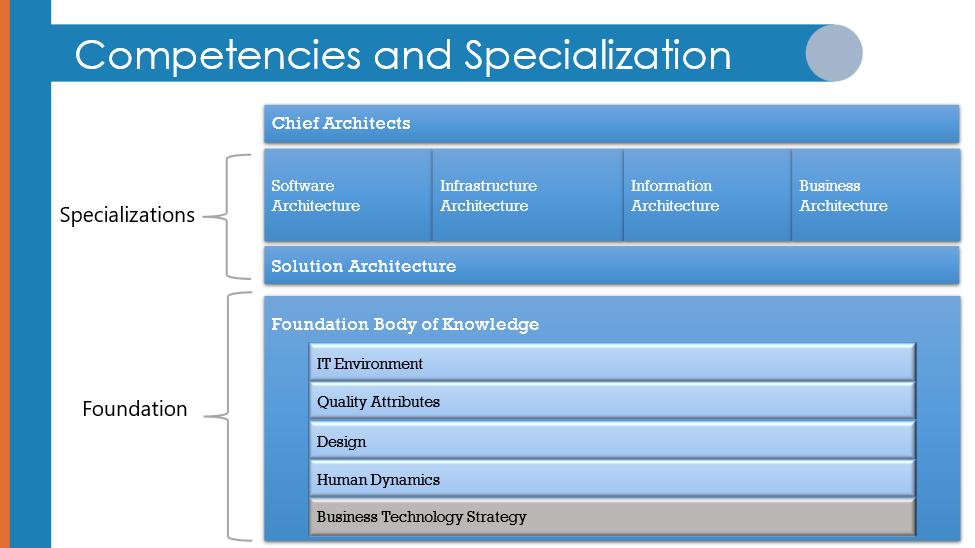 BTABoK Competencies and Specialization
The competency model outlined in the BTABoK defines a distinct value proposition for the profession, specifically in the area of Business Technology Strategy. Subsequent sections of this article will detail how this model is relevant to specialists, including business and software architects, as well as to sub-specialists and technical experts. Additionally, the Extended Team article provides insights into leveraging these competencies in organizations where the architecture profession is not yet fully established. The following canvas is commonly utilized to assess and illustrate competency strengths and gaps among individuals and architecture teams.
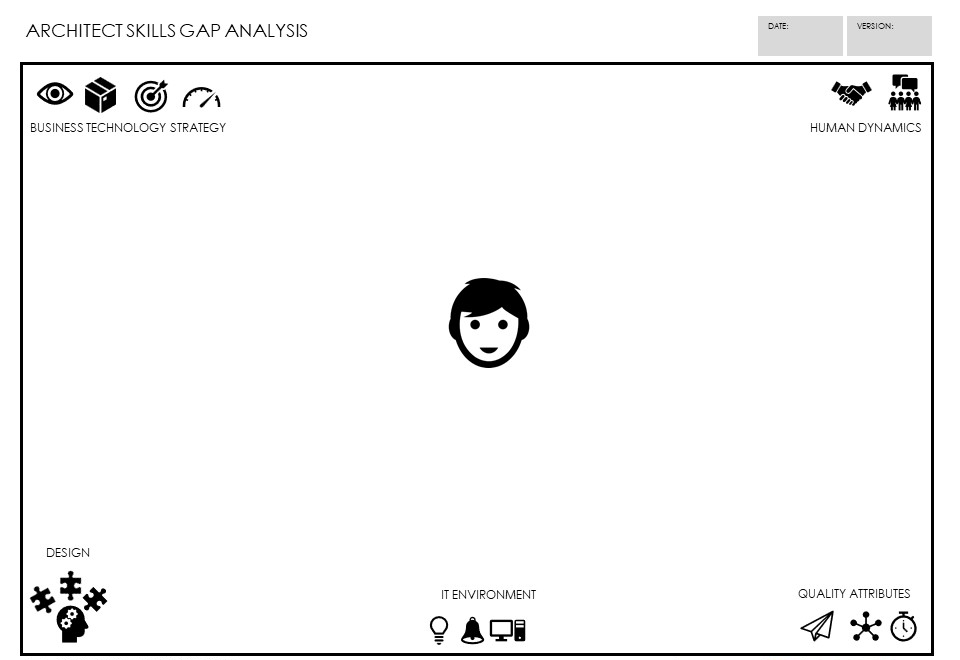 Architect Skills Gap Analysis Canvas
TThe Skills Gap Analysis Canvas serves as a strategic tool for assessing the current competency levels of teams or individuals across five key pillars. For comprehensive usage instructions, please reference the canvas documentation.
The Architect’s Practice in the Enterprise
The primary factor in establishing a successful architecture practice is consolidating all personnel within the organization, as well as direct vendors and service integrators holding the architect title, into an Architecture Practice. Frequently referred to as a Center of Excellence or similar designation, this practice aims to unify all architects around the core operational drivers for success, including:
- A competency and experience-driven career framework,
- A value and outcomes-oriented mindset,
- A metrics-based approach to quality and performance drivers,
- Comprehensive visibility into the current maturity of the practice, and
- Collective agreement on a roadmap for maturity advancement.
The practice may require participation from non-architects performing architectural functions, especially in organizations at earlier maturity phases. Further insights can be found in the extended team documentation.
Organizational Scale Considerations
The operational dynamics of an architecture practice vary substantially depending on its size, ranging from 1–15 to upwards of 1,000 members. IASA has extensive experience supporting architecture practices of all scales across military, government, commercial, product vendor, and service integrator sectors. The BTABoK methodology is designed for scalability both upward and downward. It is imperative that organizations understand engagement model development principles while ensuring the practice model aligns with organizational context.
Building an Architecture Practice
Consistent with BTABoK’s outcome model framework, every architecture practice should establish and evaluate clear objectives and metrics to drive outcome and goal attainment. Practices are encouraged to define their operational drivers, success criteria, and associated KPIs, systematically reviewing BTABoK concepts to determine their applicability.
Typically, an Architecture Practice is accountable for the following five core activities:
- Establishing a Practice Steering Body
- Talent Development
- Maturity Progression
- Promoting Organizational Awareness and Buy-in
- Managing the Engagement Model
The Architecture Practice Steering Body
In large architecture practices, establishing a steering group is a strategic initiative to lead overall success. This group should consist of representatives from all architect functions, including key vendors and service integrators, provided they adhere to BTABoK principles.
A steering group should be optimized for effective governance: sufficiently compact for efficient leadership while sufficiently representative of the organization’s architecture community. Typically, a hierarchical structure is present, with enterprise and chief architects reporting to senior IT leadership such as a VP of IT or CTO. These individuals may design the engagement model autonomously or depend on vendor-led methodologies, which may overlook critical aspects involving architect-led execution. Full commitment to the engagement model across all levels of the architecture community is essential. Therefore, the steering committee should comprise members from all specializations, including committed junior architects. This group defines the practice framework, roles, deliverables, and key engagement model components and may leverage standards from BTABoK and other frameworks (e.g., DODAF, TOGAF, FEAF, SAFe, BCS). It is important to recognize that frameworks alone are seldom sufficient; most are prescriptive and do not offer the multidisciplinary, holistic perspectives required for comprehensive practice management.
Talent Development
The foundation of a high-performing architecture practice is the professional development and continuous upskilling of its members. Modern organizations face significant challenges due to diverse backgrounds and varying perspectives within their architectural staff. These differences can affect value perception and hinder practice maturity. Internal divergence on measured outcomes, practices, and methodologies often impedes progress more than external or structural challenges.
Architect professional development initiatives should focus on:
- Implementing a standardized competency model,
- Evaluating all practitioners against the established model,
- Fostering both knowledge- and mentorship-based growth opportunities,
- Tracking competency growth over time,
- Recognizing, promoting, and supporting individual achievement, and
- Contributing learning outcomes to the broader professional body of knowledge.
Talent advancement should form an integral part of the organizational training strategy, supplemented by follow-up and support mechanisms within both the engagement model and mentoring processes. These enable architects to apply new competencies in practical, controlled environments.
Human Resources and Job Titles
A significant challenge for mature practices is the alignment of HR processes related to employment, promotion, and titles. Currently, job titles and promotion processes vary greatly—even within large organizations—and lack standardization in line with industry expectations. Collaboration with Human Resources is crucial, leveraging external skill frameworks for recruitment, promotion, and ethical standards. However, HR departments often require guidance on the specific requirements for professional designation and achievement-driven processes. Disciplines such as accounting and law may offer valuable insights, but active cooperation between the architecture steering body, IASA, and HR will accelerate the development of robust standards tailored to architecture practice.
Mapping Stakeholder Touchpoints
One of the initial steps in developing an architecture practice is assessing interactions with various organizational stakeholders. For example, architects may interface primarily with operations, IT management, or business management; software architects may focus on DevOps functions, collaborating closely with development, operations, product management, and mid-tier IT leaders. This operational clustering can constrain their influence on senior management’s strategic objectives and value realization. Conversely, business architects may work closely with senior management on capabilities and strategy. Strategically mapping these touchpoints is key to establishing unbroken alignment from corporate strategy to execution and consistent value creation.
Utilize the Architecture Touchpoints Canvas for systematic documentation and analysis of current and target stakeholder relationships. This process is best facilitated through steering group workshops and is instrumental for defining the intended state of the engagement model and evaluating current operational realities.
Maturity Progression
Architectural practice maturity is primarily measured by its contribution to organizational digital advantage and business outcomes. Team competence and the sophistication of the engagement model are principal drivers. However, advances are bounded by the overall maturity of the organization, including executive acumen in operations, finance, and openness to digital transformation. Refer to the BTABoK Maturity Model and Architecture Capability materials for further guidance.
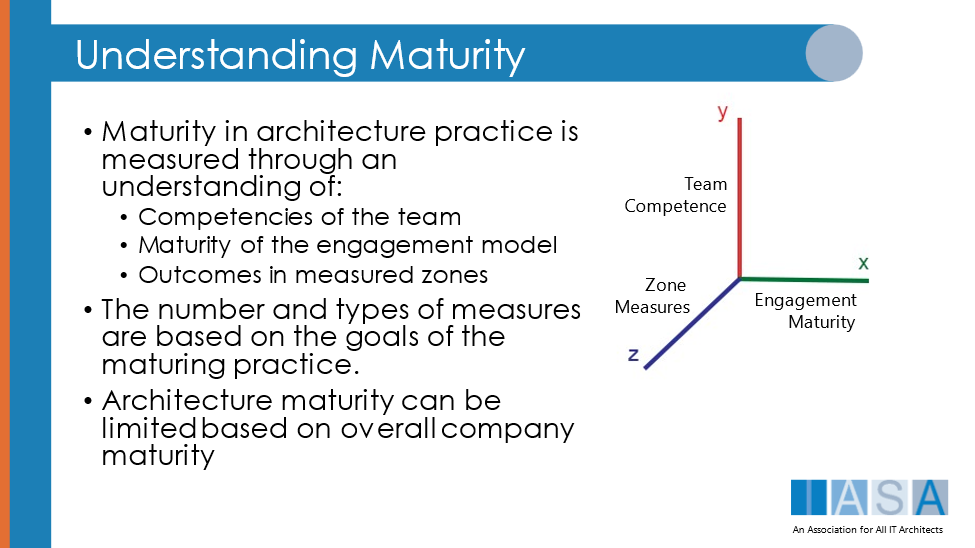 ## Architecture Practice Objectives
As a part of the practice and engagement model there should be clear objectives for the entire group of architects employed by an organization, including vendors and SI partners. This means the practice has to set and measure these objectives and how they are being achieved alongside working with other business units on digital advantage. In most cases these two elements will cross over significantly. Effectively the architecture practice becomes responsible for a portion of outcomes related to all areas of the business it officially supports. However, it needs to be noted that based on the BTABoK, this level of support must be proactive involvement in the delivery of value for the business units the practice engages with, including the IT business unit, thus enterprise wide objectives are only possible if there are enough architects to commit to such proactive engagement.
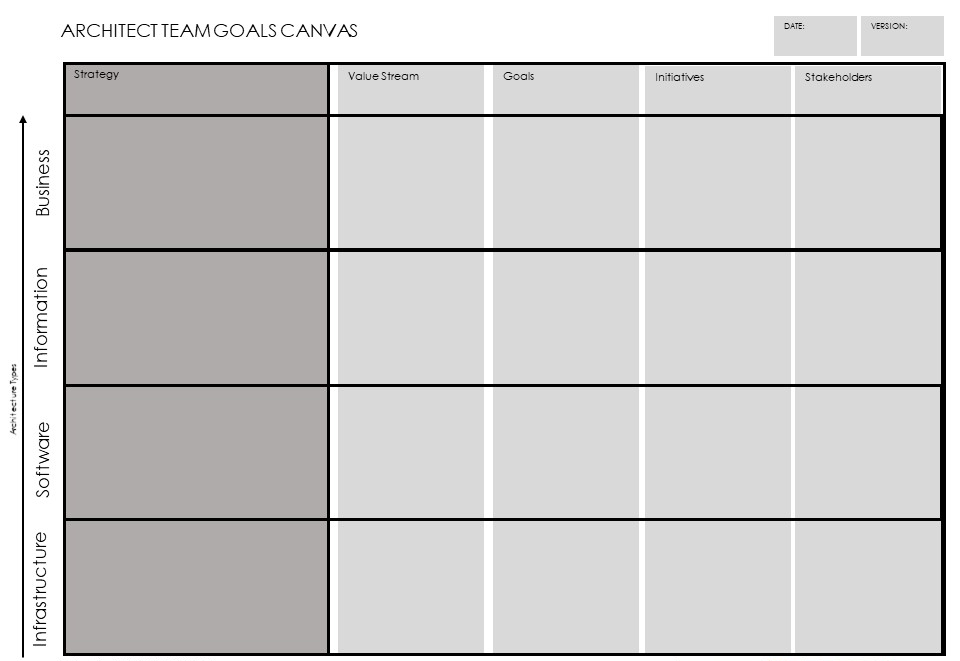 Architects and Change/Transformation
The BTABoK is heavily weighted towards a transformation based practice model. That means the entire BTABoK is oriented towards innovation, change, transformation and not run the business or design a business narratives. This focuses the architecture practice on business and technology strategy and execution.
The BTABoK and Demand Management
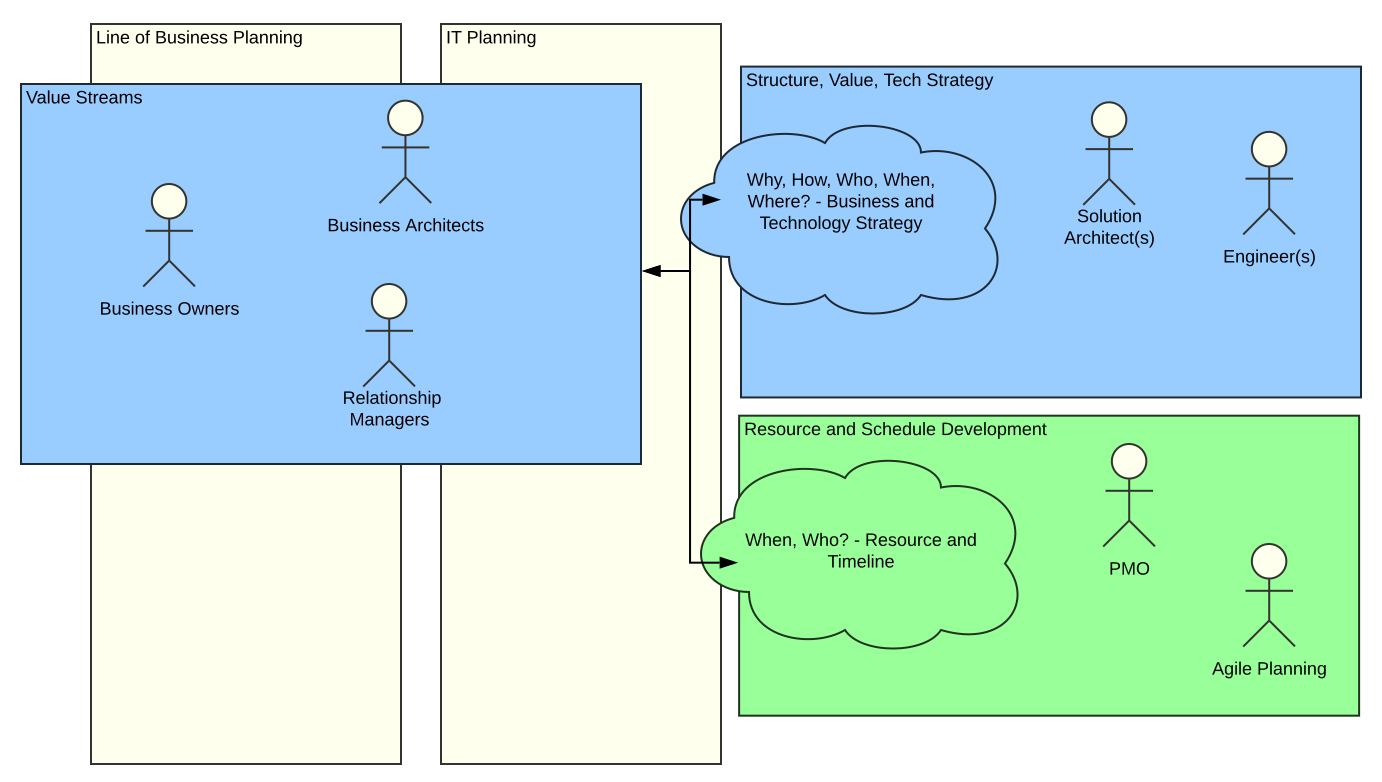 The suggested primary demand management method for architects in an enterprise landscape is a paring of business architects (which follow the competency model) with relationship managers and business owners. The business architects are directly aligned with solution architects which they bring in very early in innovation and experimentation. This creates a shared ownership of strategy, structure, value and decisions between strategy and execution. It is necessary in this model to deeply align business and solution architects and their deliverables.
Growing Acceptance/Awareness
The architecture practice as a whole, not just the steering body must represent itself as a professional group that serves a valuable and essential function of the enterprise. It also must strive to demonstrate this to the industry. The purpose of the first is to always grow awareness around how the organization perceives architecture as an organizational capability. The purpose of the second is to ensure that the organization is desirable as an employer or client in the architecture community and profession. This is also a secondary outcome of the presentation and contribution of thought leadership back into the community of architects.
Managing Contributions and Collaboration
There are numerous ways for every level of architect to contribute back into the profession in a way that is measured. These contributions should become a fundamental part of achievement especially early on in the architect career path. Many architects believe they cannot contribute until they are very senior but in many ways this is the root cause of our lack of shared professional body of knowledge.
Some examples and opportunities include:
- Sharing experiences applying BTABoK concepts or methods of a concept or method on a project – both and good and bad results (of course this contribution must have private data removed but the learning remains)
- Creating videos, articles, or other records of applying patterns or techniques and tagging them to the body of knowledge
- Patterns, quality attributes and viewpoint examples
- Supporting working groups delivery especially where the working group needs more junior members to help with the overall time contribution required
For more senior members
- Videos, interviews, and speaking opportunities
- Article contribution to official publications and organizations (beyond personal blogs)
- Mentoring and teaching
- Contribution to the Body of Knowledge
- Coordination of organization architecture practice learnings as overall contributions
- Participation in and leadership of working groups
- Influencing the organization to adopt external levels of knowledge and practice
Managing the Engagement Model
It is essential that this group create an understandable engagement model and that they do so in a way that represents the real work of the architects in the organization. For a full description of developing an engagement model see Engagement Models.
The Architect Capability Canvas provides a tool for overall capability management of the architecture practice and there are multiple additional canvases that aid the development of a truly well-understood and accepted model of practice.
Processes, Deliverables and Tools
One of the critical elements of the engagement model is the processes, deliverables and tools architects in the practice use to deliver their work, including frameworks, documents, collaboration, etc. The architecture practice should make annual or bi-annual updates to this based on feedback, experimentation and success from the entire practice group.
The Engagement Model Designer can be used to understand current and future state techniques on a single page.
Topics
About the Author
Paul Preiss
Click to see all articles by this authorCopyright & License
Copyright © 2026 Iasa Global
All rights reserved. This content is provided by Iasa Global, the premier association for IT architects worldwide.
Creative Commons License
This work is licensed under a Creative Commons Attribution-NonCommercial-ShareAlike 4.0 International License.
You are free to share and adapt this material for non-commercial purposes, provided you give appropriate credit and distribute under the same license.Related Articles
Content Information
Intermediate